


Education
What People Are Asking
-
How do I know it's local?
Manitoba has 125 registered chicken farmers proudly raising nutritious, high-quality chicken for you and your family to enjoy. Look for the “Raised by a Canadian Farmer” logo on your fresh packs of chicken in your grocery store, so you know you’re buying local chicken.

-
What are chickens fed? What about hormones and steroids?
Manitoba chicken is raised by Manitobans for Manitobans, and like all Canadian chicken it is:
- Grain-fed.
- Raised without added hormones or steroids.
- Free from antibiotics or antibiotic residues.
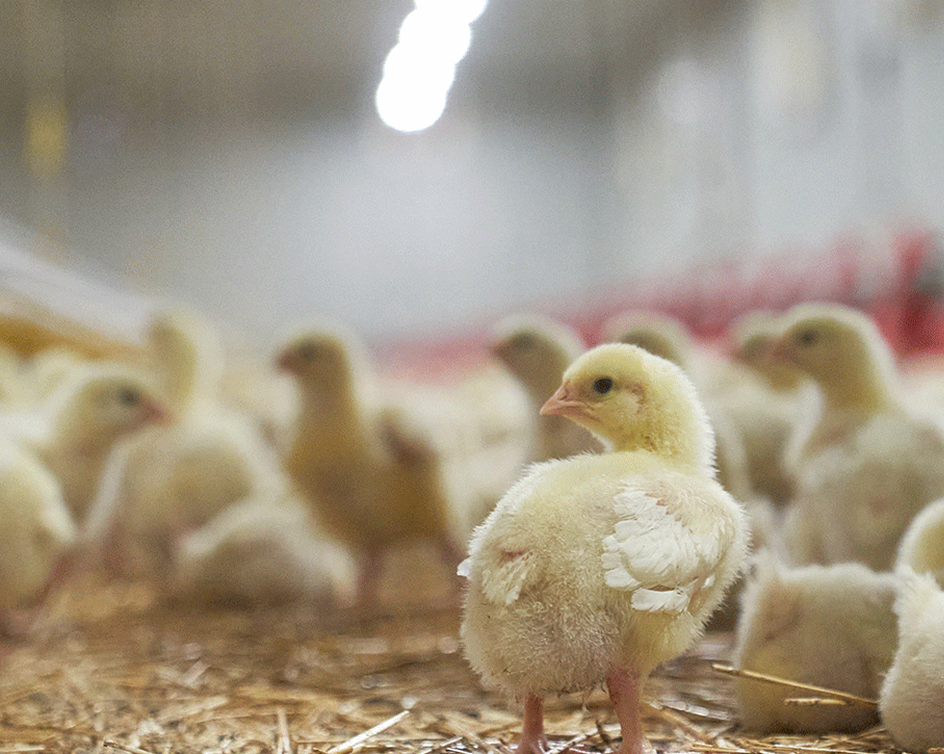
Manitoban Farmers
Raise free-run chicken year-round, so you can enjoy fresh chicken any time. Free-run means chicken roam freely throughout clean, spacious, well-ventilated barns.
Follow mandatory on-farm food safety and animal care programs so you always have high-quality, nutritious, wholesome chicken.
If you are registered with Manitoba Chicken Producers, a farmer-run organization that ensures farmers raise enough chicken to meet demand and get a fair price for their chicken. Chicken from registered Manitoba farms is available fresh in stores and restaurants throughout Manitoba and Northwestern Ontario.
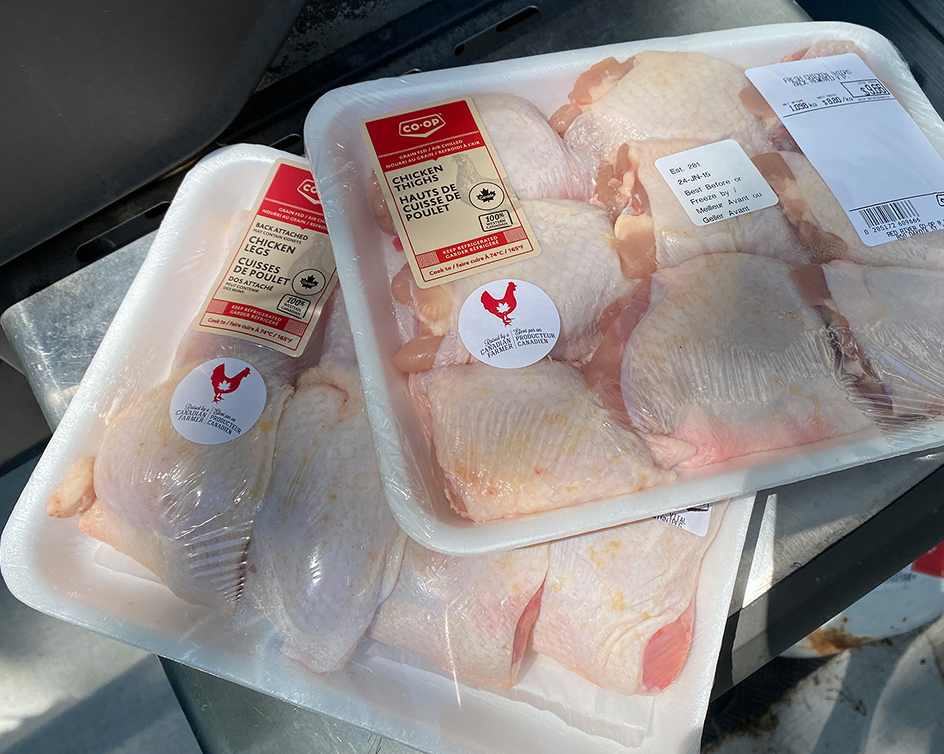
Specialty products
In addition to the excellent variety of boneless, skinless, bone-in, whole, and ground Manitoba chicken products, specialty chicken products are also available in some stores and restaurants. These products have the same great taste as other varieties of chicken. Some examples of specialty chicken include:
- Heavy roasting chickens – Fresh or frozen chickens weighing over 2 kilograms.
- Halal chicken – Raised and processed in accordance with Islamic dietary laws.
- Raised Without Antibiotics – Look for the “Raised Without Antibiotics” label at grocery stores. All Manitoba chicken meat is free of antibiotics and antibiotic residues.
What People Are Asking
-
Do I need to rinse or wash my chicken?
No!
- Only properly cooking chicken makes it safe to eat.
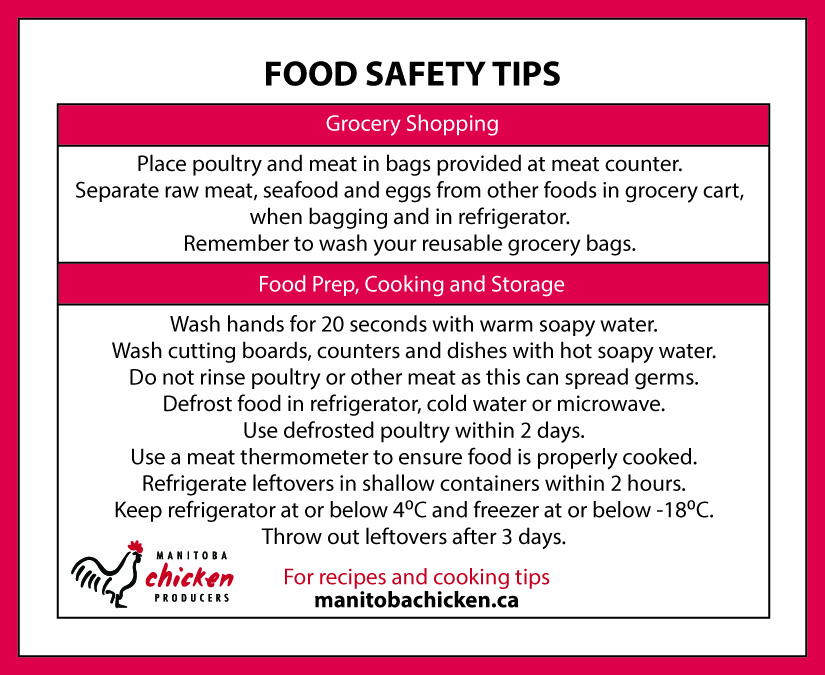
- Thoroughly wash hands before, during, and after handling raw chicken.
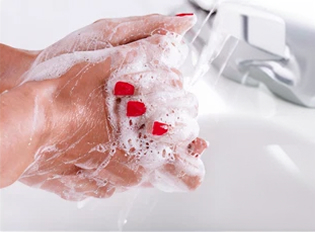
ALWAYS WASH YOUR HANDS BEFORE AND AFTER HANDLING RAW CHICKEN 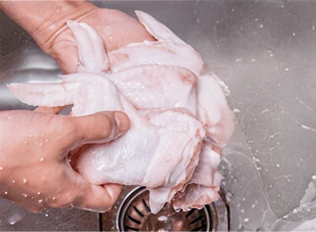
NEVER WASH YOUR CHICKEN -
How can I avoid cross contamination?
Package and separate: When you’re storing raw foods in the fridge, place them in sealed containers or plastic bags on the bottom shelf or in a designated drawer.
Marinades: When marinating, discard any leftover liquid. Make sure to wash and sanitize your brush or use separate brushes when marinating raw and cooked foods. If you want to use a marinade for basting or as a sauce, set aside some of the marinade before pouring over the raw chicken. Only use marinade that has not come into contact with the raw chicken for basting or dipping.
Rubs and spices: Discard any spice mix or dry rub that has come into contact with raw chicken.
Cutting board safety: When using a cutting board, it’s important to wash it with hot, soapy water and regularly sanitize it with a weak solution of bleach and water. Use different cutting boards for meat and poultry, fruits, vegetables, and bread. Have a dedicated cutting board for meat and poultry. Do not use a wood cutting board for meats, they are porous and create ideal environments for bacteria to grow. Instead use glass, plastic or acrylic cutting boards that are dishwasher safe and can be sanitized with a weak bleach solution.
-
Should you wear gloves when handling raw chicken?
It isn’t necessary to wear gloves on your hands while handling raw chicken as long as you properly wash your hands afterwards.
If you have a cut on your hand, it may be a good idea to wear disposable gloves while working with any raw meat to prevent infection.
What People Are Asking
-
Do I need to use a thermometer when I’m cooking chicken?
Yes!
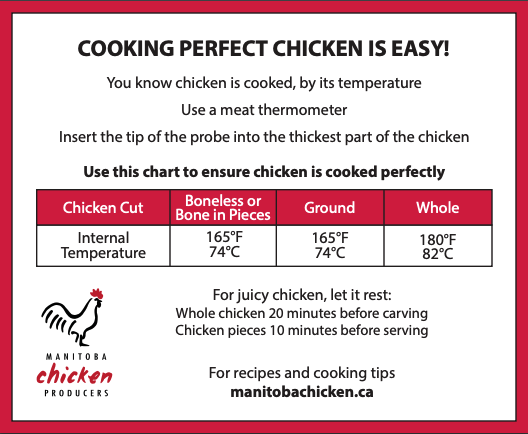
The best way to tell if your chicken is done is to determine the internal temperature using a meat thermometer.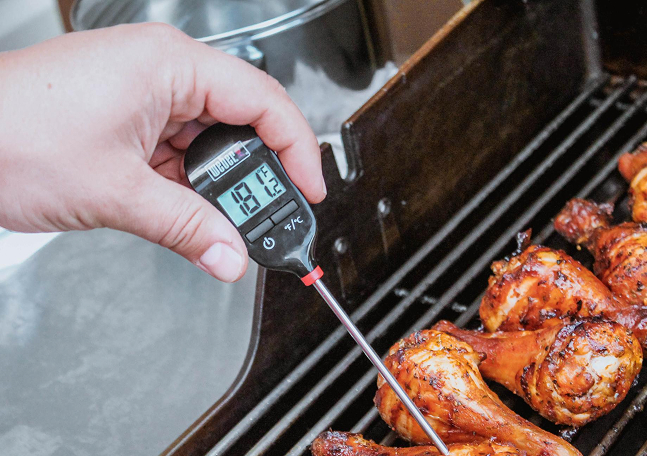
-
What temperature should I cook my chicken to?
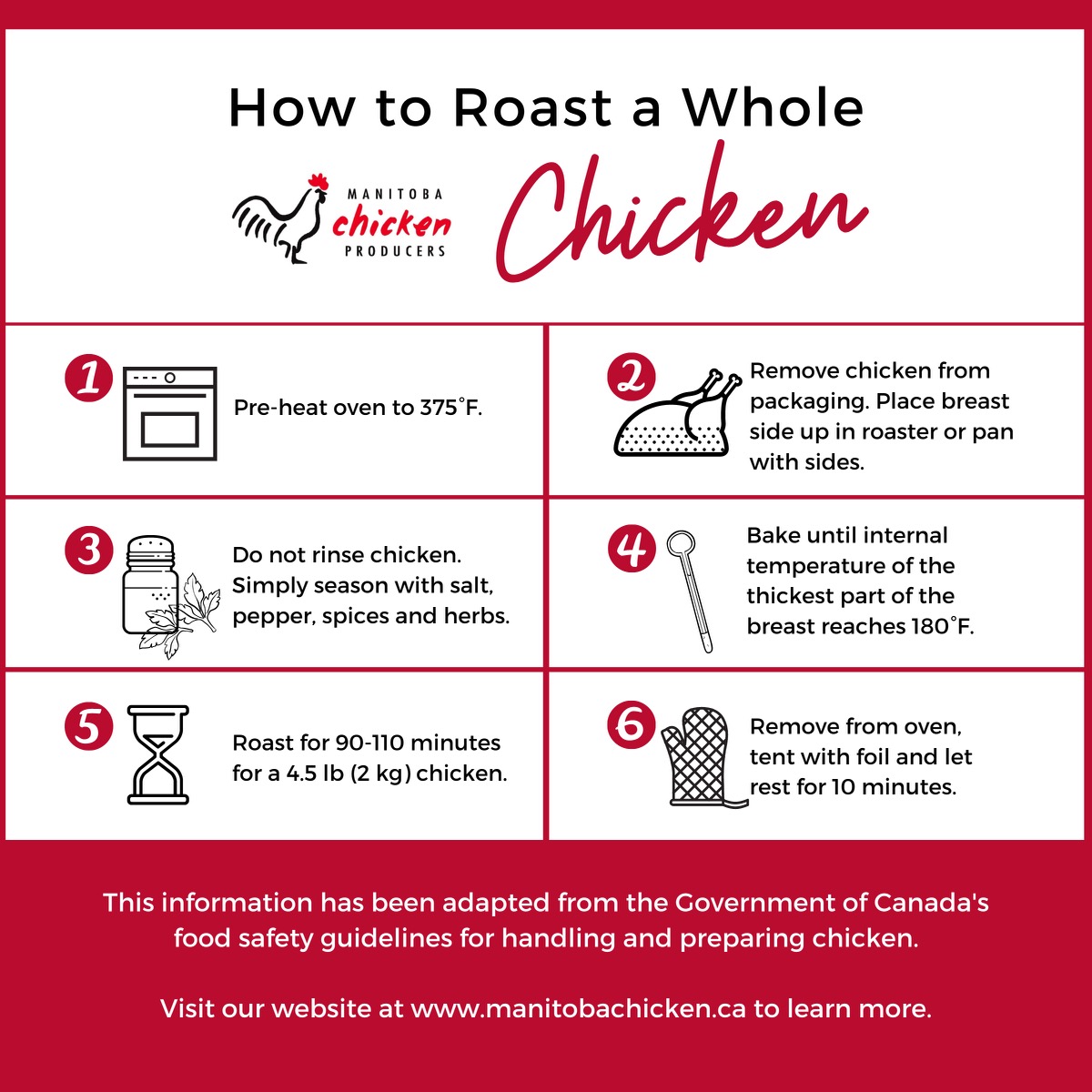
Cook whole chicken to an internal temperature of 180°F (82°C) and chicken pieces and ground chicken to 165°F (74°C). It’s important to note that cooking times will vary depending on the cooking method (e.g. roasting, baking, grilling, sautéing).
-
How do I make my chicken juicy and tender?
Chicken is a staple protein for many people, but getting it just right can sometimes be tricky. Here are some simple tips to help you make sure that your chicken turns out juicy and delicious every time:
- Use a meat thermometer to ensure you do not accidentally overcook the chicken
Overcooking chicken is a common mistake and quickly leads to tough and dry chicken. Using a meat thermometer is an easy way to know when the chicken is done so that you can avoid drying it out. - Let your chicken rest after you take it out of the oven or off the grill
Loosely cover the chicken with foil and let it sit at room temperature, so the juices can settle back into the meat. Boneless chicken and bone-in pieces should rest 5-10 minutes. Let a whole roast chicken rest for 15-20 minutes. - Consider using a brine or marinade
Brining or marinating your chicken not only helps keep it moist, but can also inject a lot of extra flavour into your meal.
- Use a meat thermometer to ensure you do not accidentally overcook the chicken
OUR VIDEOS
What People Are Asking
-
How long does raw chicken last in the fridge or freezer?
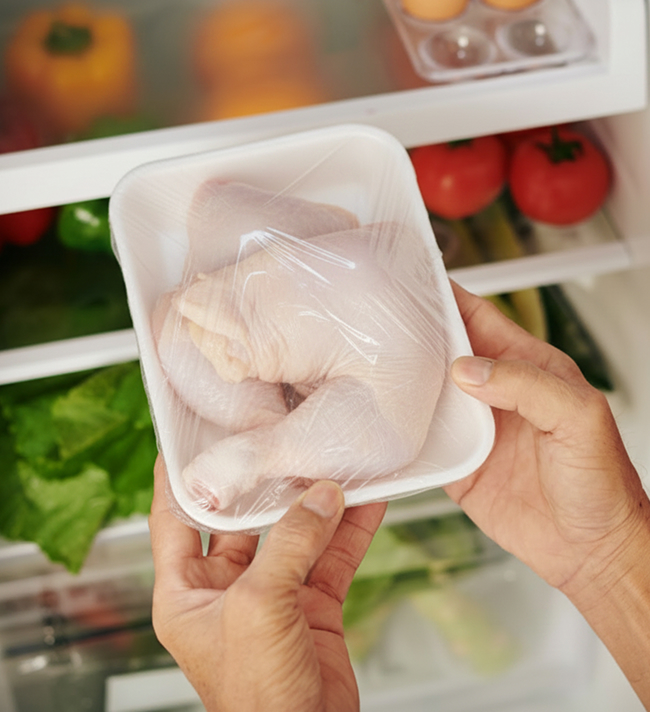
How you store and for how long you store chicken is very important for keeping your food safe. When freezing chicken, always label it so you know how long it’s been in your freezer.
Storage Chart
Note: Fresh packages of chicken also have a “Best Before” date on the package. This date indicates that the chicken should be cooked by this date or frozen before the date has surpassed.
TYPES OF CHICKEN KEEPS IN FRIDGE KEEPS IN FREEZER Ground chicken 1-2 Days 3 Months Whole chicken 2-3 Days 12 Months Chicken pieces 2-3 Days 6 Months Storage tips:
- Keep your fridge temperature between 40F (4C) and 32F (0C).
- Keep your freezer temperature below 0F (-18C).
- When you get home from the store, place packaged chicken into the meat compartment or on an edged plate or pan on the bottom shelf of the refrigerator, so juices do not drip onto other foods.
- If you won’t be using ground chicken within 2 days, freeze it.
- If you buy large family packs, divide chicken into individual or meal-size portions. Wrap for the freezer and label with the date, type of chicken, and approximate weight of each package or number of servings.
-
How long does cooked chicken last in the fridge or freezer?
Once chicken has been cooked it should be stored in a fridge or freezer within 2 hours.
Once in the fridge, chicken that has been cooked can last for up to 3 days.
If placing it in the freezer, you can expect it to keep for 3 months.
Storage tips:
- Keep your fridge temperature between 40F (4C) and 32F (0C).
- Keep your freezer temperature below 0F (-18C).
-
How should I thaw chicken?
Thawing Methods and Times
Never thaw chicken at room temperature or on the counter. These methods provide the ideal environment for bacteria growth. Be sure to cook thawed chicken within 48 hours.
Thawing Chart
Wrapped in refrigerator 10 hours per kg (5 hours per lb) Wrapped and in cold water (changed several times) 2 hours per kg (1 hour per lb) Microwave defrost setting 10 minutes per kg (5 minutes per lb) Refrigerator thawing:
Thawing in the refrigerator is the safest method of preparing frozen chicken, but it also takes the longest to defrost. When thawing chicken in the refrigerator, should be wrapped and placed on a plate with edges in the bottom of the fridge to avoid drippings from contacting other food. For this method, you should plan on approximately 10 hours per kilogram of chicken or 5 hours per pound.
Cold water thawing:
To thaw chicken faster, place it in a resealable freezer bag in a bowl of cold water in the sink. It is important that the water is cold, as warm water can encourage bacteria growth. Additionally, it’s important that the water be changed every 30 minutes to maintain the temperature of the water. This method typically takes 2 hours per kilogram or 1 hour per pound. Make sure that the sink and the surrounding area you are thawing in is cleaned immediately with a mild bleach solution when you’ve finished.
Microwave thawing:
Though it can sometimes dry out or cook the edges of chicken, when you’re in a hurry and you’re preparing chicken pieces, microwave thawing is the best way to go. When defrosting in a microwave, chicken should be loosely covered and the pieces turned, separated, and rotated several times during thawing to ensure even defrosting.
It’s also important to defrost chicken on a low setting, otherwise the outside may cook while the inside stays frozen. Most microwaves have a poultry defrost setting, so use that if you have it. If not, a general rule to use is about 10-15 minutes per kilogram or 5 minutes per pound. Be sure to check your chicken often to ensure that it is thawing evenly and not overcooking or drying out.
Source: Chicken.ca – Cooking School
Food Safety
When handling and preparing chicken, it is important to be aware of a few simple food safety guidelines. We’ve prepared a list of frequently asked questions and tips to keep you and your family safe and healthy in the kitchen.
-
What should I look for when buying chicken at the grocery store?
- When buying any meat products, check the packaging for any tears or holes. Meat should be cold and properly wrapped. Vacuum-sealed packages are ideal because they keep the meat completely contained.
- Always check the “Packaged On” and “Best Before” dates.
-
How can I ensure the chicken I bring home stays fresh?
- Take advantage of the plastic bags supplied at the meat counter and package your chicken before you put it in your cart. The extra layer of plastic will protect from spillage and contamination.
- Chicken or other meat purchases should be the last thing you pick up before you head to the checkout.
- Bring a cooler bag and some ice packs with you to the grocery store. Place your groceries in the bag on your way home to keep them cold, especially if you need to run other errands. Try to schedule grocery shopping last on your to-do list to make sure your food stays cool.
-
I don’t know how long this chicken has been in my freezer. Is it safe to eat?
If your freezer has been working properly, it’s safe to eat chicken that has been in the freezer longer than what is recommended. However, past the recommended freezing time, your chicken may be drier and tougher after cooking. For best results, use the chicken in a recipe that has a lot of liquid such as in a soup, stew, chili, or pot pie, instead of roasting or grilling it.
-
I bought previously frozen chicken. Can I refreeze it?
Previously frozen chicken should not be refrozen. Instead, put it in the fridge and cook it within 1-3 days. It can also be cooked and then frozen for use in a variety of recipes.
-
Why does frozen chicken sometimes have dried-out white patches?
These patches are called “freezer burn” and they are caused by poor packaging and/or leaving chicken in the freezer too long. Freezer-burned chicken is safe to eat, but it may be less juicy and tender. Once chicken is thawed, freezer burned potions of the chicken can be removed and discarded. To prevent freezer burn, wrap chicken in plastic freezer bags, seal in plastic using a vacuum-pack sealer, or wrap in heavy-duty aluminum foil. Squeeze out as much air as possible before sealing. Chicken with freezer burn is best used in soups and stews.
-
I’ve experienced a power outage and my chicken has started to thaw. What should I do?
Ground chicken should never be refrozen. If partially or completely defrosted but still cold, cook first and then freeze if necessary. If other cuts of chicken still have ice crystals, they can be safely refrozen.
If the chicken is completely thawed but still very cold, refrigerate it immediately and cook it that day. Freeze the cooked chicken if necessary. If the chicken is no longer cold, throw it out.
-
I left chicken on the counter to defrost and forgot about it. It isn’t cold anymore. Should I cook it?
No, it should be thrown out. Thawed chicken left at room temperature is a perfect place for bacteria to grow.
Cooking kills bacteria, but you may have contaminated surfaces and other foods while you prepared the chicken for cooking.
-
How long can cooked chicken stay out at room temperature?
The maximum amount of time is 2 hours. The sooner you get it into the fridge, the better. Remove meat from the bones and take the stuffing out of the cavity of a whole bird. Divide large quantities of food (soups, stews, chilis) into smaller portions or spread out in shallow containers to allow the food to chill more quickly. Although cooking destroys bacteria, new bacteria in the air and on surfaces can contaminate the food.
-
Can I put a pot of hot chicken soup (or stew or chili) directly into the fridge to cool?
Waiting until food cools to be placed in the fridge is a common food myth, in fact the opposite is true. And it would take a significant amount of hot food in your fridge to warm up anything else in the fridge, unless your fridge is inefficient. Here are some easy food storage tips to follow for cooling and safely storing hot perishable foods, like soups, stews and chilis:
- Refrigerate within two hours. Divide into smaller, sealed containers and placed in a single layer in the fridge. This promotes fast cooling and safe storage.
- Repackage large batches into small, shallow containers. They will cool more quickly, and it will be easier to store and to reheat smaller amounts.
- Use a sink filled with ice to plunge warm containers into. Add enough cold water to cover the ice without seeping into the containers. Let the containers chill about 30 minutes before refrigerating them.
- Always reheat stored, refrigerated items to a rolling boil before serving.
Resources
-
 More Cooking with Manitoba Chicken
Want a physical copy?
Contact our team. -
 Now You're Cooking with Manitoba Chicken
Want a physical copy?
Contact our team. -
 How Chicken Gets to Your Plate Booklet
Want a physical copy?
Contact our team. -
 Manitoba Chicken Recipe Booklet
-
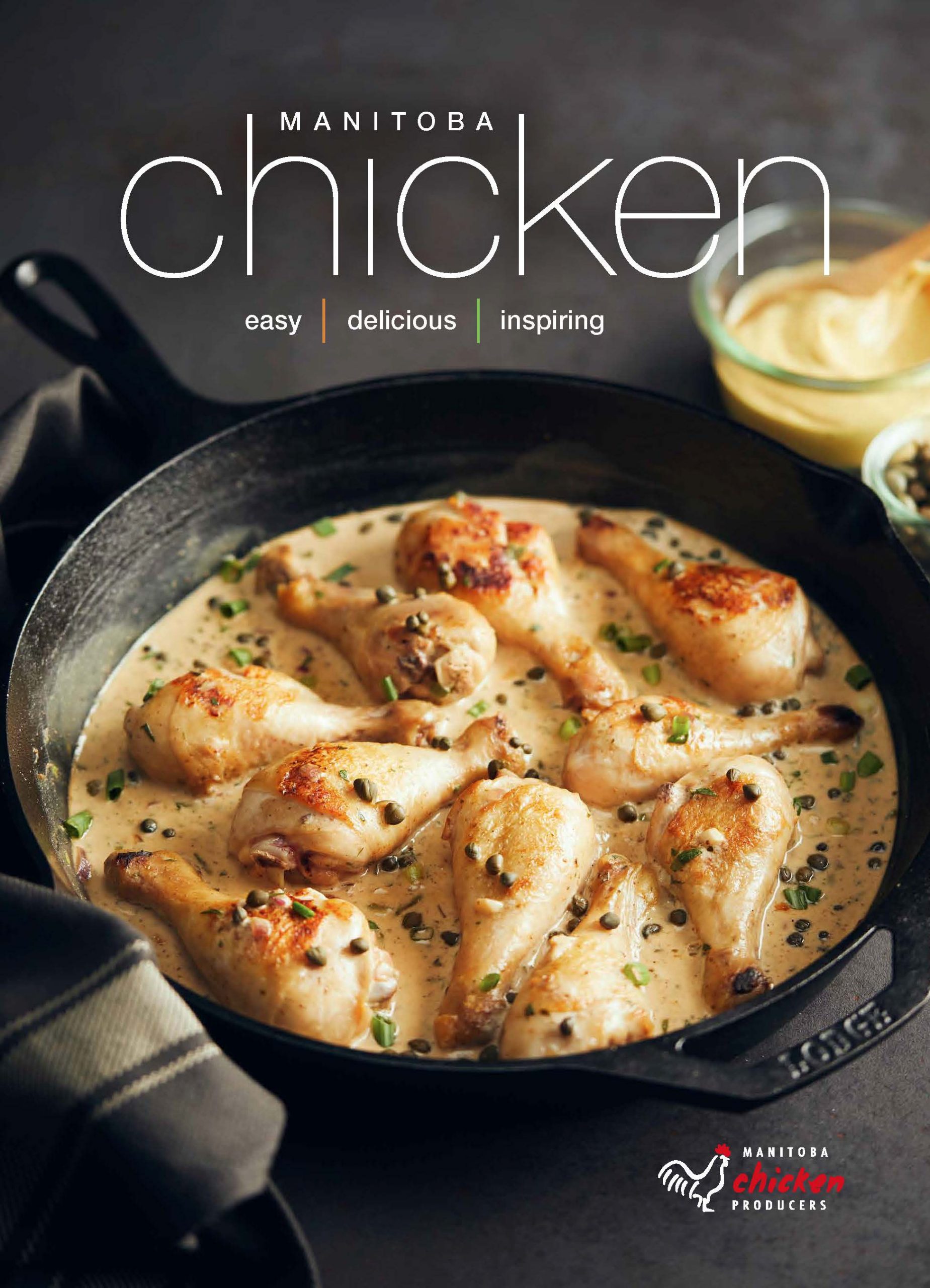 Manitoba Chicken Recipe Booklet
Order Form
Please fill out the following form.
"*" indicates required fields